

Sell a Business in Jersey City, New Jersey
Jersey City is not a single business market — it never has been — but the transformation of its waterfront into a genuine financial services and professional hub has created a seller market and a buyer pool that most New Jersey cities can't approach.
The Newport Financial Center, the concentration of major financial institutions along the Hudson waterfront, and the technology and professional services firms that have followed them have produced something specific and valuable for business sellers: a local buyer pool with real deal sophistication, well-capitalized, and actively looking.
That’s the waterfront story. But Jersey City also has a Journal Square commercial district, a substantial residential-serving business base in Bergen-Lafayette and the neighborhoods away from the water, and a development-adjacent business community built around the decade-long build-out of one of the most ambitious urban transformations in the state. Selling a business in Jersey City means knowing which of these markets you’re in — because the buyer who wants a financial advisory practice on Exchange Place is not the buyer who wants a restaurant in Journal Square.


The waterfront financial and professional corridor
The concentration of financial services employment along Jersey City’s waterfront — major banks, trading operations, back-office financial services, technology firms supporting those institutions — has created both a professional services seller market and a buyer pool that’s unusual at lower-middle-market scale. Accounting and advisory practices, professional B2B services firms, staffing companies serving the financial sector, and agencies and marketing firms with financial services clients all trade in a market where the buyers arrive informed about deal mechanics. The individual buyer from a finance or technology background who understands deal structure, can read a CIM, and doesn’t need basic process education is more common here than anywhere else in the four-county geography.
The ongoing waterfront development has also produced a secondary category: businesses that serve the build-out itself — commercial real estate services, project management consultancies, specialty contracting firms, and B2B service companies whose client base is the development activity. That market is real, though less defined as a buyer category than the financial and professional market. For those businesses, the buyer pool is more likely to be a strategic or individual buyer than an institutional platform.
Professional Services and B2B Services cover the transaction specifics most relevant to this corridor. Marketing / Advertising Agency covers the agency market for firms with financial services client concentrations.
Hoboken mirrors this at smaller scale — a dense professional and retail commercial environment with strong NYC commuter economics supporting independent professional practices, restaurant and hospitality businesses, and personal service businesses at the upper end of the Main Street market.
Journal Square and the residential-serving business market
Journal Square is Jersey City’s second commercial center — a transit hub with a dense surrounding business community that serves the city’s residential population rather than its financial employers. Retail, restaurant, personal service, and community-oriented businesses here trade in a different market: individual and SBA-financed buyers, often with community ties, motivated by ownership rather than consolidation. The buyer pool is active and the market is real, but it’s the same Main Street dynamic that characterizes the densely populated interior municipalities of Hudson County generally.
For sellers in this market, preparation and presentation matter more than location: a well-documented, owner-independent business with clean financials sells across the buyer pool that Jersey City’s density attracts. SBA Buyers covers how SBA financing affects the individual-buyer transactions most common here.
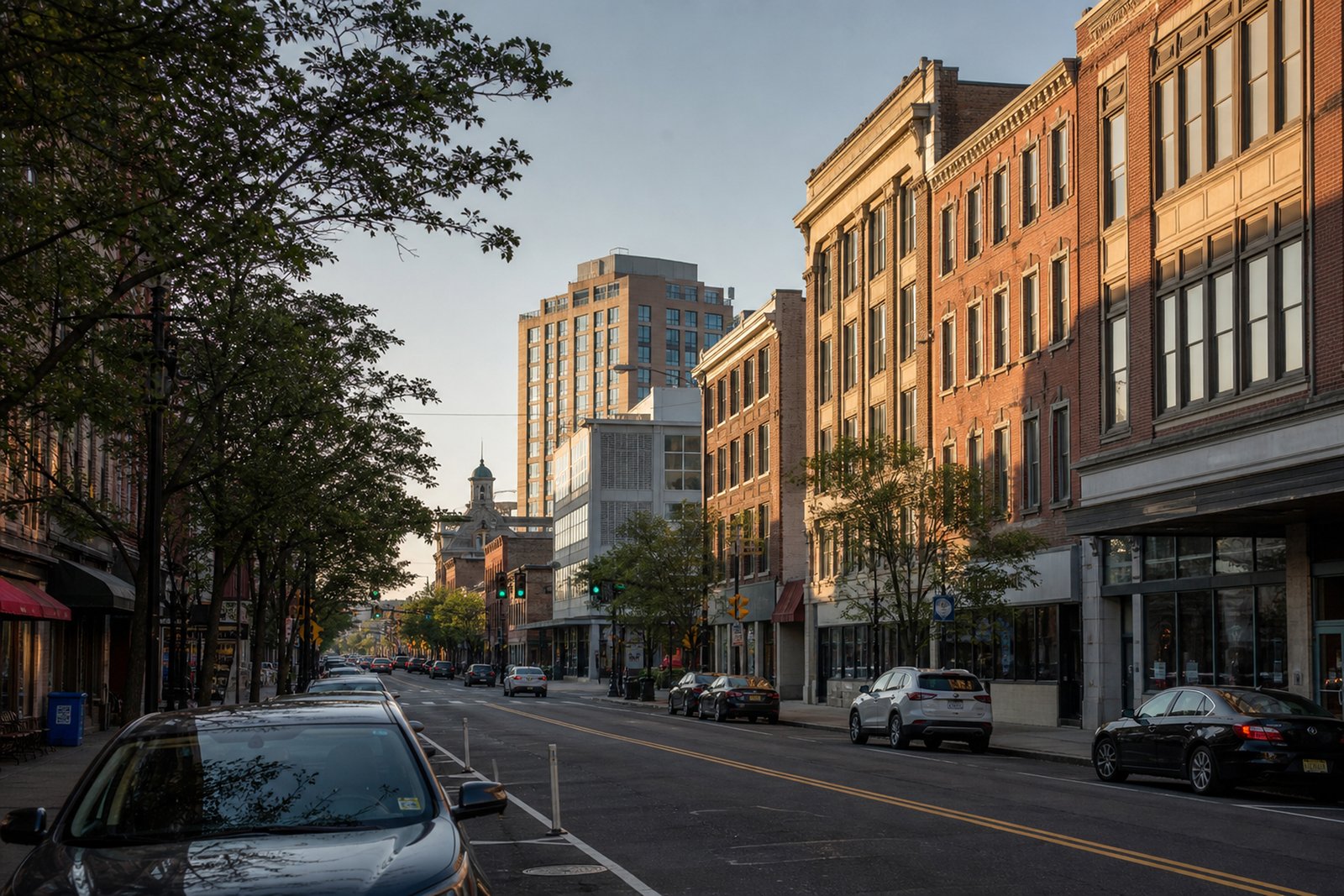
Journal Square sellers compete best when the business is presented as transferable: clean financials, documented operations, and less owner dependence make it easier for the right individual or SBA-financed buyer to act with confidence. SBA Buyers explains the financing path common in this market.
REQUEST a confidential CONSULTATIONThe Jersey City buyer pool
Jersey City sellers have access to a buyer pool that's stratified in a useful way.
At the upper end — professional services, financial sector B2B, larger established businesses — the buyers arrive with sophistication that accelerates the process. At the Main Street end — retail, restaurant, personal service — the density of the residential population and the proximity to New York creates more buyer interest than comparable-sized businesses see in less dense markets. Both ends benefit from the same geographic reality: Jersey City is close enough to everything that buyers from throughout the metro area can reasonably engage.
The practical point:
Business Valuation Services covers how we assess each sub-market; the Jersey City conversation starts with which buyer pool you’re actually selling into.
Part of a larger Hudson County market
Jersey City is Hudson County's largest city and commercial center. Sellers here are part of a four-county geography — Essex, Hudson, Union, and Middlesex — that represents one of the densest concentrations of business activity in the region. Our Hudson County page covers the full county market and how the sub-markets connect.
Frequently Asked Questions
The process depends on which Jersey City market you’re in — the financial services and professional corridor, the Main Street and residential-serving market, or somewhere in between. The first step is a confidential conversation that places your business in the right buyer pool before anything goes to market. Confidential Business Sales covers how we protect sellers throughout.
It depends on the type of business and which buyer pool it attracts. A financial advisory practice and a Journal Square restaurant are both Jersey City businesses valued on entirely different frameworks. How Much Is My Business Worth? covers the methodology; the Jersey City conversation starts with which market you’re actually in.
Indirectly — it deepens the buyer pool, particularly at the professional and institutional end of the market, by making Jersey City accessible to buyers who want metro-area exposure without Manhattan overhead. For sellers whose customers or client base extends into the New York market, that reach can also support a stronger commercial diligence narrative. It doesn’t automatically increase price, but it expands who’s at the table.


