

Sell a Manufacturing Business in New Jersey
Manufacturing sales are their own discipline. The balance sheet is heavier, the diligence is deeper, the workforce is harder to replace — and in New Jersey, an environmental statute most owners have never heard of can sit directly on the closing timeline.
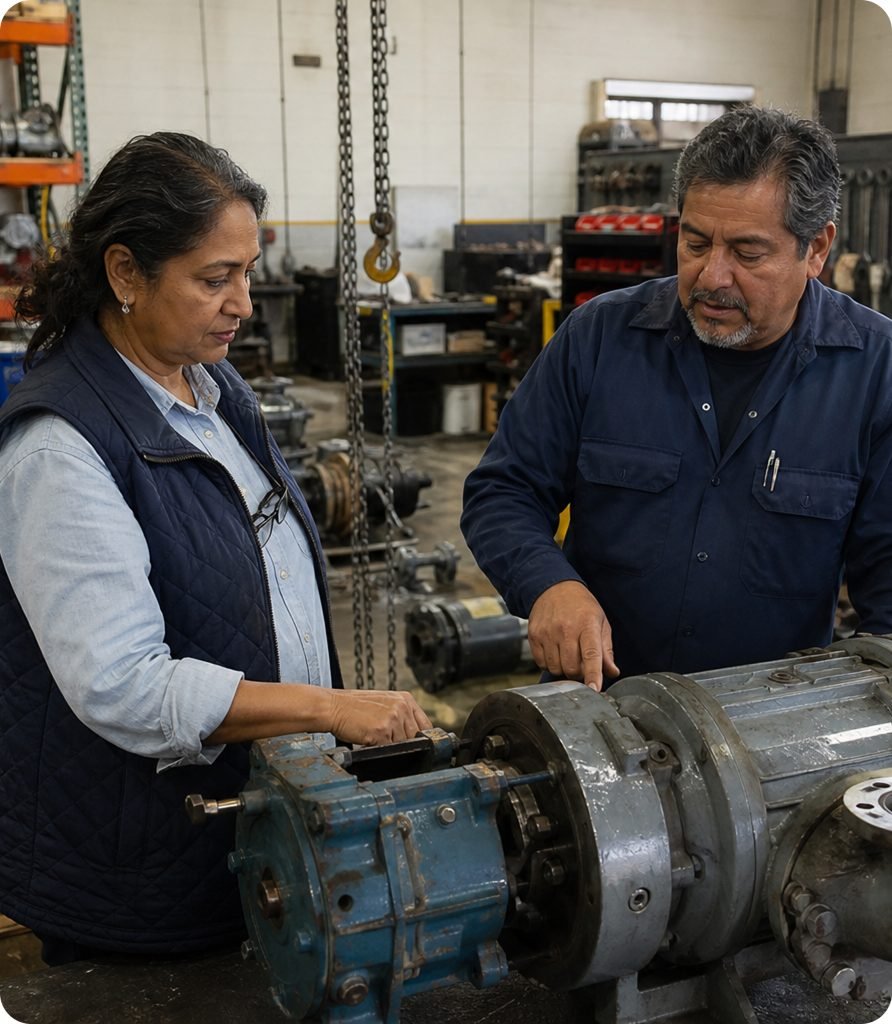
They’re also, right now, a seller’s opportunity. Buyers want American production capacity again: private equity is consolidating niche manufacturers at a pace the sector hasn’t seen in decades, strategics are paying for capabilities and certifications they can’t build fast enough, and New Jersey’s position — port access, the pharma and food ecosystems, a deep bench of specialty fabricators — keeps its manufacturers on acquisition target lists.
We’ve sold New Jersey manufacturers — metal fabrication, glass fabrication, and production-adjacent businesses among them — and this page covers what’s genuinely different about these deals: who the buyers are, how the equipment actually gets valued, the preparation that moves the price, and the New Jersey environmental rule that belongs in your planning years before it lands in your closing.
Request a confidential consultationWho buys New Jersey manufacturers
The buyer pool for a profitable manufacturer is deeper than most owners assume — and which segment pays your premium depends on what you make:

Private equity — platforms and add-ons.
The most active force in manufacturing M&A today. Funds are building platforms in precision machining, contract manufacturing, food production, packaging, and specialty fabrication — and their portfolio companies are hunting add-ons: the $2M–$10M shop that brings capacity, capabilities, or customer relationships to a platform that values them at its own higher multiple. If PE-backed consolidators operate in your niche, you have institutional buyers whether or not you’ve heard from them — and if you have heard from them, the unsolicited letter deserves a process, not a reply.
Strategic acquirers.
Competitors and adjacent manufacturers buying what takes years to build organically: certifications, qualified-vendor status, skilled crews, and installed capacity. Strategics can pay the highest prices in manufacturing — the synergies are real — and require the most careful confidentiality handling, since the interested strategic often competes for your customers today.
Individual and SBA-financed buyers.
At the smaller end, manufacturing has a financing advantage most service businesses lack: the equipment is collateral. Lenders like assets they can appraise, which makes fabrication and production shops disproportionately financeable — and widens the buyer pool at exactly the sizes where other industries narrow.
The New Jersey layer.
Proximity to the ports, the pharmaceutical and food corridors, and the New York metro’s industrial demand keeps this state’s manufacturers strategically located — a fact buyers price and sellers should too.
How manufacturing businesses are valued
The framework is the one we describe on Business Valuation Services — earnings times a multiple, with the multiple set by risk and transferability. Manufacturing adds three wrinkles worth understanding before anyone quotes you a number:
The equipment doesn't get paid for twice.
The most common seller misconception in this industry: adding the machinery’s appraised value on top of an earnings-based price. In a going-concern sale, the equipment is how the business earns — its value is inside the multiple, not stacked on it. Equipment matters enormously, but differently: well-maintained, documented, current machinery supports the earnings story, collateralizes the buyer’s financing, and reduces the capex the buyer must budget — all of which show up in the multiple and the deal’s financeability. A shop whose equipment value genuinely exceeds its going-concern value isn’t having a valuation conversation; it’s having a harder one, and honesty about that early beats discovering it at market.
The recast has a manufacturing accent.
The add-backs we hunt for here: the owner running a machine or an estimating desk (a real cost the buyer must replace — it cuts both ways), family payroll, above- or below-market rent on owner-held real estate, and one-time tooling or development costs expensed through the P&L.
What moves the multiple in this industry.
Customer concentration — manufacturing’s classic weakness, because long relationships with a few accounts is how these businesses grow. Certifications and approvals (ISO, AS9100, FDA registration, qualified-vendor listings) — transferable proof of quality that buyers pay for. Skilled-workforce depth — the machinists and fabricators who can’t be hired off the street. Recurring or contractual production versus job-shop lumpiness. And honest maintenance capex: a buyer’s diligence will estimate what the equipment needs; a seller’s records should answer first.
The full valuation framework, and the no-cost baseline: Business Valuation Services

The New Jersey issue: ISRA
Every New Jersey business sale carries the bulk sales notification (covered on our Sell Your Business in New Jersey page). Manufacturing sales can carry a second, heavier state requirement — and it surprises more sellers than any other item on this page.
The Industrial Site Recovery Act (ISRA) ties environmental review to the sale itself: when an “industrial establishment” — defined largely by the business’s industrial classification and its involvement with hazardous substances, a net that catches many ordinary manufacturers — is sold or its operations transferred, the transaction triggers obligations to the NJ Department of Environmental Protection. In broad strokes: the state must be notified when a covered sale is underway, the site’s environmental condition must be addressed through New Jersey’s licensed-professional remediation system, and the deal generally cannot simply close past the obligation — though the rules provide paths to close while compliance proceeds, and exemptions exist for operations whose hazardous-substance involvement is genuinely minimal.
What this means practically for a manufacturing seller:
Find out early whether you’re covered. Applicability turns on your operations’ classification and materials — a question for environmental counsel, answered in exit planning, not at the letter of intent. Some shops assumed to be covered aren’t; some assumed exempt are.
Environmental housekeeping is sale preparation. Storage practices, documentation, and any known conditions are cheaper to address years ahead than under a buyer’s deadline — and a seller who walks in with an environmental file reads very differently than one who’s never looked.
Build it into the timeline and the negotiation. ISRA compliance has its own clock and its own costs, and who bears them is a deal term. Handled early, it’s a managed workstream; discovered late, it’s the reason manufacturing closings slip.
ISRA isn’t only a manufacturer’s problem — industrial services companies that operate their own facilities can trigger it too. If that’s your business, start with our Industrial Services page.

Preparing a manufacturer for sale
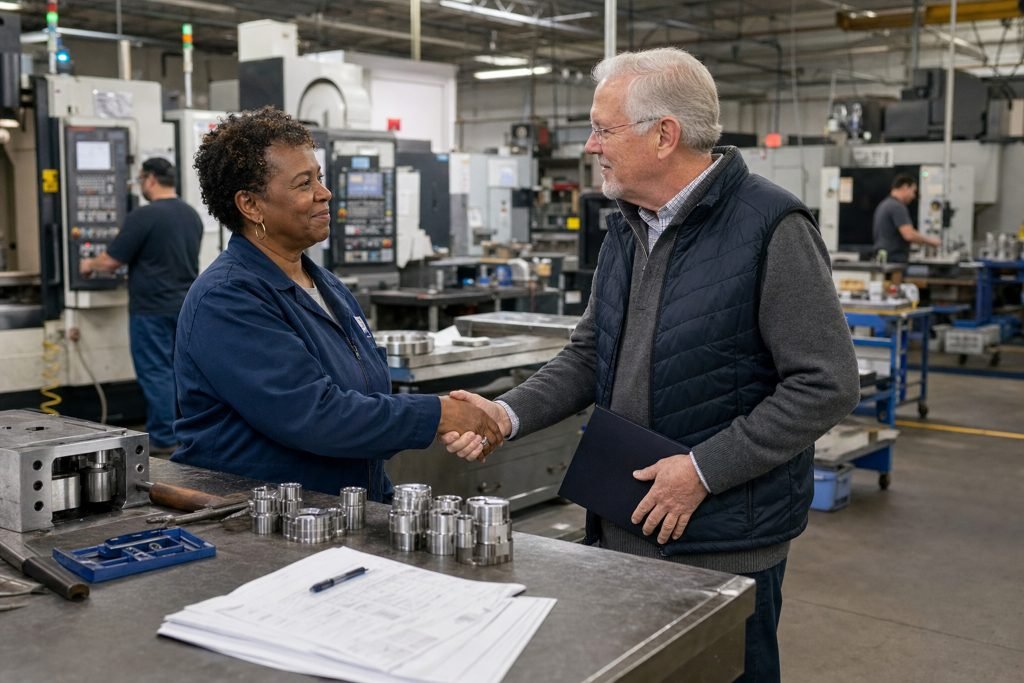
The six preparation projects on Preparing Your Business for Sale apply in full. Here’s how they re-weight for a manufacturer:
The workforce is the owner-dependence question. In this industry, “can it run without you” usually means “can it run without you and survive the retirement of your two best machinists.” Cross-training, documented setups and processes, and a working second layer of supervision are the manufacturing version of firing yourself — and the retention conversation with key skilled employees (see Confidential Business Sales for the sequencing) matters more here than almost anywhere.
The equipment file is a value document. Maintenance logs, rebuild histories, and a straight-faced capex forecast. Buyers will build their own estimate of what the floor needs; sellers whose records answer first keep control of that number.
Concentration gets the earliest start. The three-customer fabricator is normal and financeable-with-difficulty; the playbook — dilution where possible, contracts and transition commitments where not — is in the prep pillar, and it needs the most runway of anything on this list.
And the environmental file, per above — the preparation project unique to this page.
Request a confidential consultation
Why manufacturers work with us
We have handled sales of metal-fabrication, glass-fabrication, and production businesses among the more than 40 New Jersey companies our team has sold. Our practice is built for the deal sizes where manufacturing actually trades: $500K to $25 million, from SBA-financed shop sales to PE add-on processes. Fred Petito’s 25 years as an attorney and C-level operator — in multinationals, founder-led companies, and roll-up acquisitions — are experience on the operating side of businesses where the floor makes the money, and it shows up in how we read yours: the way a buyer will, before the buyer does.
Related industry hubThe first conversation is confidential, costs nothing, and starts where every manufacturing sale should: what the business would trade for, which buyers would pay it, and — if you're a covered site — what ISRA means for your timeline.
Request a confidential consultationFrequently asked questions
What is a manufacturing business worth?
Like any business in our range: a multiple of adjusted earnings, with manufacturing multiples set by customer concentration, certifications, workforce depth, equipment condition, and revenue character. The honest answer for your shop requires comparable transactions and a look at your specifics — which is what our no-cost broker opinion of value provides.
Does my equipment add to the sale price?
Not on top of it — in a going-concern sale, the equipment’s value lives inside the earnings and the multiple, not stacked on them. What good equipment does: supports the earnings story, collateralizes the buyer’s loan, reduces their capex budget, and strengthens the multiple. What it can’t do is get paid for twice.
What is ISRA and does it apply to my business?
New Jersey’s Industrial Site Recovery Act ties environmental compliance obligations to the sale of covered industrial businesses — with applicability turning on your operations’ classification and materials. Whether it covers your shop is a question for environmental counsel, and the right time to ask is during exit planning, because compliance has its own timeline and costs that belong in the deal plan, not the closing-week surprises.
Who buys manufacturing businesses in New Jersey?
Private equity platforms and their add-on acquirers (the most active segment), strategic buyers paying for capacity and certifications, and — at the smaller end — individual and SBA-financed buyers, for whom the equipment’s collateral value makes manufacturing unusually financeable. Which segment pays your premium depends on what you make and how transferable it is.
Can I sell a manufacturing business with a union workforce?
Yes — unionized manufacturers sell regularly. The collective bargaining agreement becomes part of diligence and deal planning: buyers will read its terms, successor obligations vary with deal structure, and pension arrangements — particularly any multiemployer plan — need early professional attention, because withdrawal liability questions can move real money. None of it is disqualifying; all of it rewards early planning.


