

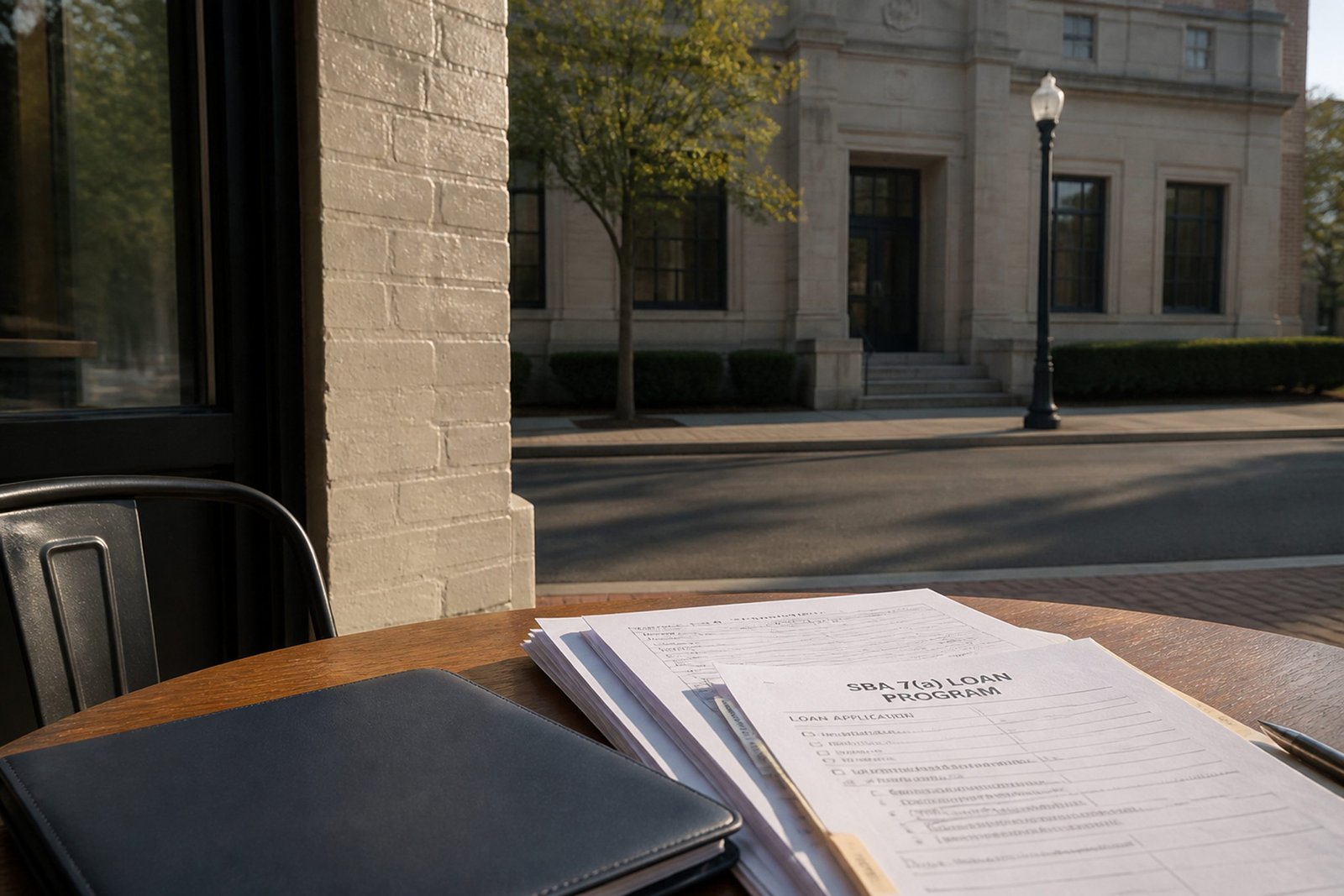
Selling Your Business to an SBA-Financed Buyer
If your business is worth less than $5 million, there’s a strong chance your eventual buyer walks in with SBA financing — and that’s mostly good news. SBA 7(a) loans are how individual buyers, corporate refugees, and first-time acquirers turn savings into purchasing power, and in a state as dense with well-capitalized professionals as New Jersey, they’re the engine of the under-$5M market.
But SBA financing isn’t just the buyer’s problem. Its rules reach across the table and shape your deal: how much cash you see at closing, what your seller note can look like, whether an earnout is even possible, how long you can stay involved, and what the bank will demand of your business before a dollar moves. This page is the seller’s guide to all of it — written to current SBA rules, which changed significantly in 2025, and which we’ll keep making decisions against as they evolve.
Request a confidential consultation
SBA financing in one section
What a seller actually needs to know about the machinery:
The SBA 7(a) program is a government-guaranteed bank loan — a bank lends, the federal government guarantees most of it, and that guarantee is why banks will finance small-business acquisitions they’d otherwise decline. Loans run up to $5 million, terms typically ten years for a business purchase, and the buyer must put in their own equity — under current rules, at least 10% of the total project cost for a complete change of ownership, most of it necessarily their own cash.
The sentence that matters most to you: the bank underwrites your business, not just your buyer. The loan gets approved because your cash flow, verified against your tax returns, covers the debt payments with room to spare. Which means everything this site says about clean, reconciled financials isn’t just good practice for SBA deals — it’s the approval condition.
Why an SBA buyer is often good news
The honest case for the buyer type many sellers underestimate:
They multiply your buyer pool. Without SBA financing, the under-$5M market would belong to the small population of buyers holding seven figures of cash. With it, every experienced operator and well-paid professional with meaningful savings is a potential acquirer — and Northern New Jersey produces those buyers in volume.
They deliver real cash at closing. A typical SBA-financed deal pays the seller most of the price in cash at closing — the loan proceeds plus the buyer’s equity — usually with a modest seller note alongside. Compare that to buyer-financed or internal deals, where you’re the bank for years.
Their approval is validation. A bank committing ten-year money to your business, after verifying your numbers, is a third party putting real capital behind the price.
The honest counterweight: SBA buyers are frequently first-time buyers, which means more hand-holding, more questions, and occasionally cold feet; the loan process adds its own diligence layer and its own calendar; and the rules below constrain deal creativity. None of that is disqualifying. All of it is manageable — if it’s managed.

How SBA rules shape your deal
Here’s where the buyer’s financing becomes your negotiation. Five rules, current as of this writing, and what each means on your side of the table:

1. The bank orders its own valuation of your business — and the loan is capped by it.
In most acquisition loans (whenever the financed amount beyond real estate and equipment exceeds $250,000), the lender must obtain an independent business valuation from a qualified appraiser, and the loan can’t exceed the lower of the purchase price or that appraised value. What it means for you: your price has to survive a stranger’s appraisal, which is precisely why our broker opinion of value is built on comparable sales — the same evidence the appraiser will use. A price the market supports clears the appraisal; a price built on hope gets marked down by the bank before the buyer can even overpay. (This is also the certified-appraisal scenario we describe on Business Valuation Services — the bank’s appraisal, ordered by the bank, at the buyer’s cost.)
2. Your seller note plays by special rules.
Seller financing still appears in most SBA deals, but current rules changed its shape. A note counted toward the buyer’s required 10% equity injection must be on full standby — no principal or interest payments — for the entire life of the loan, typically ten years, and can cover at most half the injection. Few sellers should accept ten years of silence on their money, which is why the market has adapted: the common structure is now a note outside the equity calculation, subordinated to the bank and typically on a shorter standby — often around two years — before payments begin. What it means for you: the size, standby terms, and position of your note are negotiated within the bank’s rules, not just between you and the buyer — and “the lender won’t allow that” is a sentence you’ll hear. Sometimes it’s true. Part of our job is knowing when.
3. Earnouts are effectively off the table.
SBA rules require a fixed, determinable purchase price at closing — contingent price mechanisms like earnouts don’t survive lender review. What it means for you: mostly, relief (our stance on earnouts is skeptical anyway — see Deal Structure), but it removes the standard bridge for valuation disagreements. In SBA deals, that bridge gets rebuilt with the tools the rules allow: the note’s terms, a properly structured — and genuinely worked — consulting agreement, and honest pricing in the first place. What it can’t be is “we’ll see how the business does and settle up later.”
4. Your post-closing involvement is time-limited.
In a complete sale, SBA rules cap the seller’s ongoing role — transition assistance and consulting for a limited period, generally up to a year, not an indefinite employment or ownership arrangement. What it means for you: the gradual multi-year off-ramp some owners imagine doesn’t fit a standard SBA deal. If a long goodbye matters to you, that’s an exit-planning conversation that shapes which buyers we pursue — it’s covered on Exit Planning.
5. The buyer’s cash must be real, seasoned, and documented.
Lenders now verify every dollar of the buyer’s equity injection — where it came from, how long it’s been there. What it means for you: a properly vetted SBA buyer is more verified than most cash buyers claim to be, and our proof-of-funds gate (see Confidential Business Sales) is where the pretenders exit before they’ve cost you anything.
One meta-point across all five: these rules changed materially in 2025 and will change again. The specifics above are current as we write them; the durable lesson is that in SBA deals, a third party’s rulebook sits at your negotiating table — and you want an advisor who reads the current edition, not the one from three years ago.
The SBA timeline inside our process
SBA financing doesn’t extend our 8-to-10-month arc so much as it fills a specific stretch of it. The buyer’s loan work runs parallel to due diligence — application, underwriting, the bank’s valuation, and closing conditions typically consume 60 to 90 days from a complete application, which is why the diligence stage and the loan stage largely share a calendar.
The stretch where deals actually lose time is earlier and preventable: buyers who start their lender search after signing a letter of intent, and lenders who dabble in SBA rather than specialize in it. Both are screening problems, which is to say, our problems — solved before exclusivity is ever granted:
Pre-qualification is a conversation; proof of funds is a document. A lender’s pre-qualification letter describes a buyer the bank might finance; it isn’t a commitment to finance this deal at this price. Our screening treats it accordingly — it earns credibility, not exclusivity. Before a buyer takes your business off the market, we want the equity injection verified and a real lender engaged on the actual deal.
Lender quality is a deal term. The difference between a bank that runs an SBA desk all day and a bank that does three of these a year is measured in weeks of your timeline and percentage points of close probability. We steer deals toward lenders with demonstrated SBA acquisition experience, including lenders we’ve repeatedly closed with in this market, and treat a weak lender choice as a fixable deal risk rather than the buyer’s private business.
Where all of this sits in the overall sequence: The Business Sale Process

Why sellers run SBA deals with us
Because in an SBA deal, three parties are negotiating — you, the buyer, and a rulebook — and the advisor’s job is knowing the rulebook cold: what the lender will require of your financials before it’s requested, what your note can and can’t look like, which buyer’s pre-qualification is real, and which lender will actually close. That knowledge isn’t decoration on the process; at the under-$5M end of the market, it largely is the process.
The conversation costs nothing, and if your likely buyer is SBA-financed — at your business’s size, check the odds — it’s worth having before the first offer, not after.
What happens if the buyer’s SBA loan falls through?
The business returns to market with its story intact — a financing failure is the cleanest version of a broken deal, and qualified buyers from the original process are often still there.
It’s also why the screening gate exists: verified equity, a real lender, and a credible pre-qualification before exclusivity make the fall-through the exception, not the plan.

Frequently Asked Questions
Related guide
How much cash does an SBA buyer actually bring to closing?
Under current rules, at least 10% of the total project cost must be the buyer’s equity injection — and at least half of that must be their own documented cash, with any seller note counted toward the injection locked on full standby for the loan’s life. In practice, the seller typically receives most of the purchase price in cash at closing: loan proceeds plus buyer equity, with a modest seller note alongside.
Does the SBA require a valuation of my business?
In most acquisition deals, yes — the lender must obtain an independent business valuation whenever the financed amount beyond real estate and equipment exceeds $250,000, and the loan is capped at the lower of the price or the appraisal. It’s one more reason to price on comparable-sales evidence from the start: the appraiser will.
Can I hold a seller note in an SBA deal?
Yes — most SBA deals include one. The structure is what’s constrained: a note counted toward the buyer’s equity must sit on full standby for the loan’s entire term, so the common arrangement is a note outside the equity calculation, subordinated to the bank, with payments typically beginning after a shorter standby period. The terms get negotiated inside the lender’s rules — which is exactly the kind of negotiation you want run by someone who knows them.
Can I stay involved in the business after an SBA sale?
For a limited time. In a complete change of ownership, SBA rules generally cap seller involvement at transition and consulting assistance for up to about a year — not ongoing employment or retained ownership. If a longer off-ramp matters to you, it changes which buyers we target, and it’s a conversation for exit planning, not the closing table.
How long does SBA approval add to my sale?
Run well, little to none — the loan process (typically 60 to 90 days from complete application) parallels due diligence rather than following it. The delays that give SBA deals their reputation come from late lender engagement and inexperienced lenders, both of which are screened out before exclusivity is granted.


